What opportunity lies behind the eviction of 1,800 mining subcontractors in the DRC?

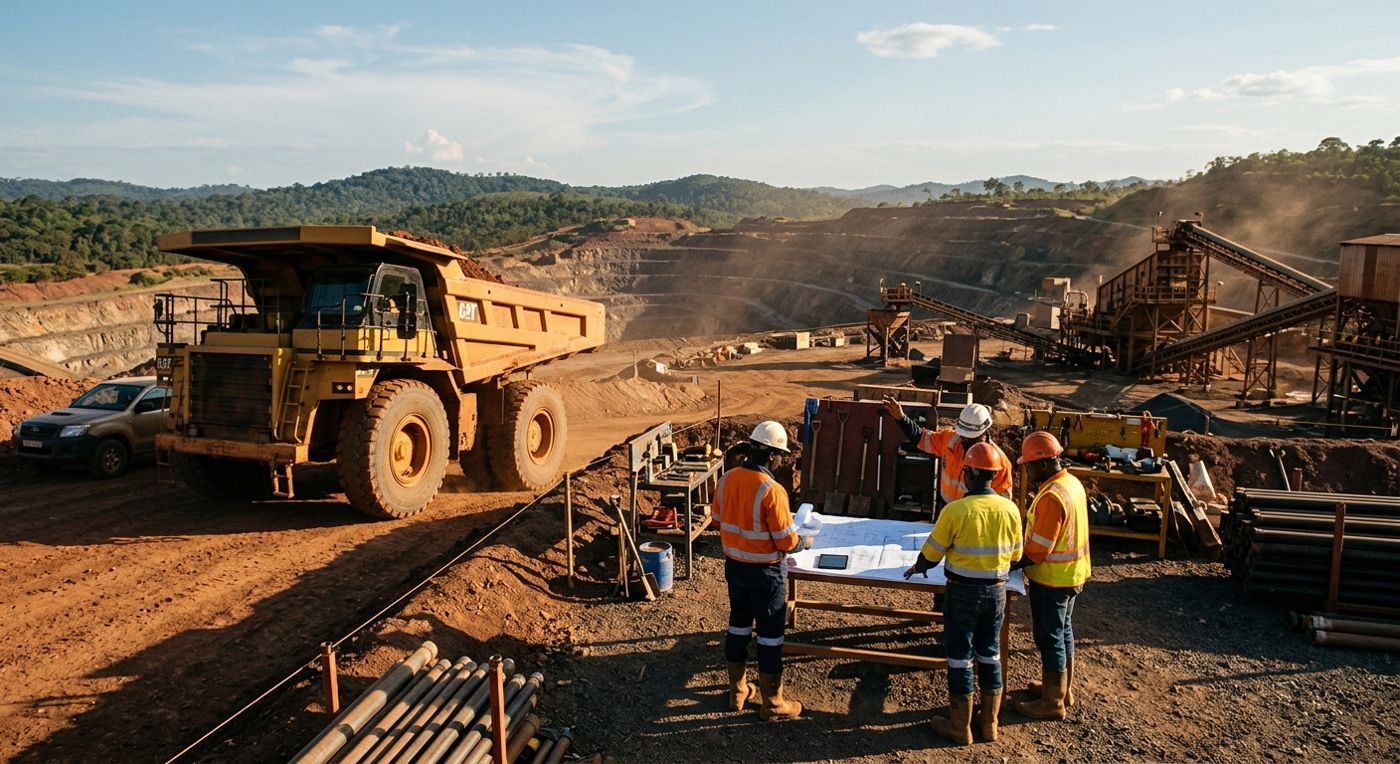
Since mid-September, the Subcontracting Regulatory Authority (ARSP) has ordered KCC and MUMI (Glencore), then Ivanhoe Mines, ERG, Kai Peng Mining and COMILU, to terminate or regularise their contracts with service providers deemed ineligible. The criteria are: at least 51% Congolese capital, Congolese management and a mainly Congolese workforce. Operators have 30 days to submit a corrective plan.
The message is clear: mining subcontracting must benefit Congolese companies. And with the new local content law (No. 26/018), applicable from 1 January 2027 and extended to the whole economy, this movement will grow.
One question remains open, however: are Congolese SMEs ready to capture these markets, and above all to keep them?
Becoming a mining subcontractor means meeting demanding criteria, and it is structuring that allows a company either to get in and win contracts, or to grow. Clear governance, a solid business model and a readable strategy are the fundamentals that make the difference in the face of a mining client's requirements. The challenge is also to diversify these SMEs' markets beyond mining and beyond a single client, to avoid depending on one customer.
This is where innovation and sustainable development change status. For an SME, ESG is not one more constraint: it is a lever for performance, attractiveness and access to international markets.
- Structured governance reassures clients and financiers alike.
- Managing HSE and social risks reduces hidden costs: accidents, site shutdowns, disputes.
- Traceability and transparency, required by international markets, now extend down to local subcontractors.
- Innovation, in processes as in services, makes it possible to stand out other than on price.
Without this, the risk is window-dressing compliance: companies eligible on paper but unable to meet the standards, and contracts that end up going elsewhere.
Regulation creates the opportunity. Structuring will decide who seizes it for the long term.
In your view, what is the main obstacle today for Congolese subcontracting SMEs: access to finance, governance or technical skills?
Read also
A project, a question? Let's talk.
Write to us or describe your request in a few questions.